Kyoto Kimono Rental Booking and Experience Guide
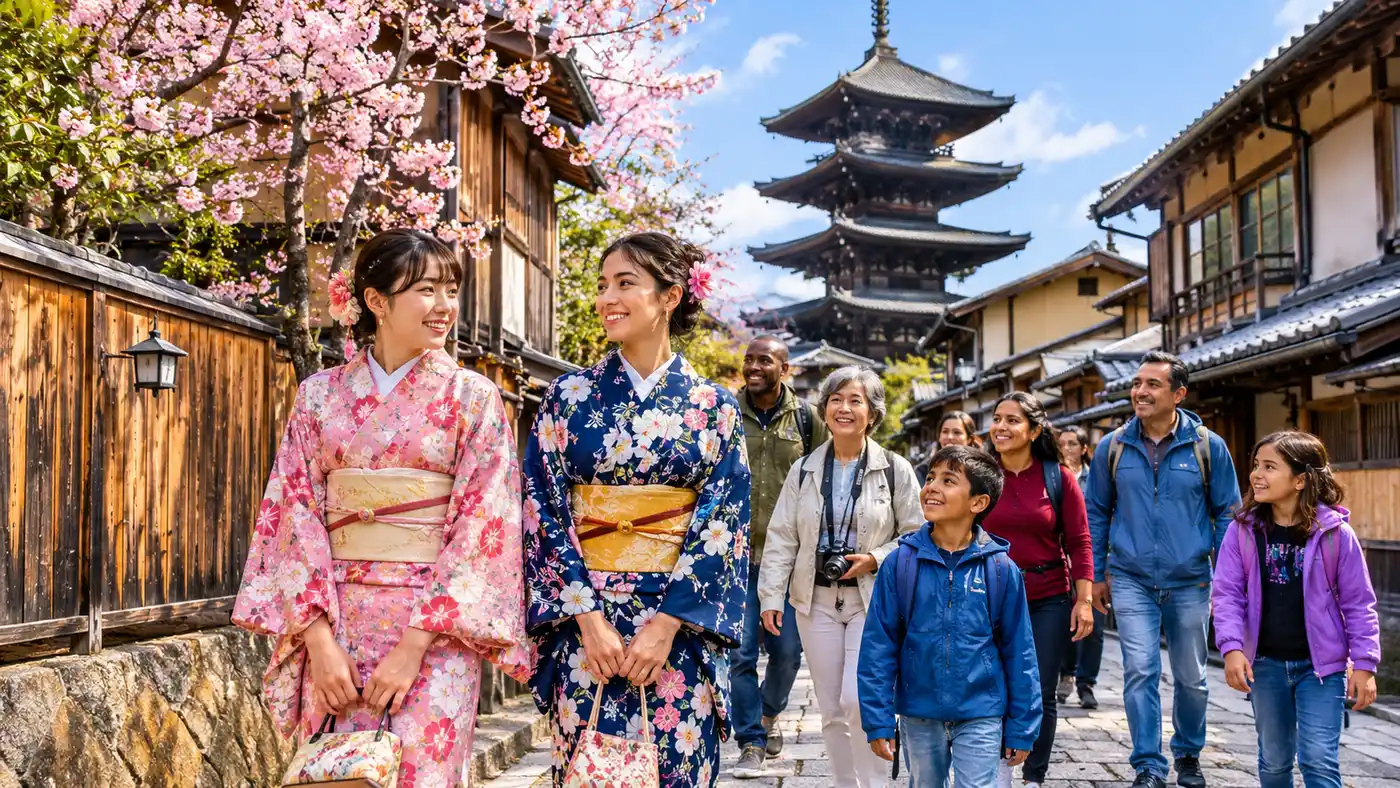
My first time walking down the flagstone streets of Ninenzaka in full traditional dress, I had no idea my obi belt was tied tight enough to replace my morning espresso. The air smelled of roasted tea and rain on old cedar. Booking in advance saved me from standing in a ninety-minute queue outside a shop near Kiyomizu-dera, which confirmed that securing a solid kimono rental kyoto reservation before you fly into Kansai airport is the single smartest logistical choice you can make for your trip.
Most travelers arrive in Kyoto with romantic visions of gliding gracefully past red torii gates. Reality involves staircase navigation, locker keys, tight booking time slots, and choosing between polyester prints and antique silk weaves. If this is your first kimono rental kyoto adventure, the process might seem overwhelming. Between balancing walk-in risks against strict online booking forms, here is what actually happens when you rent a kimono in Kyoto, from the moment you click reserve to dropping off your damp tabi socks at sunset.
Book your kimono rental kyoto experience:
How to Make Your Kimono Rental Kyoto Reservation Work Smoothly
Locking down your date and time slot requires looking at your walking stamina honestly. Morning slots between 9:00 AM and 10:30 AM vanish weeks in advance during cherry blossom season in early April and maple foliage season in mid-November. If you want the freshest selection of garments before other travelers rifle through the racks, snatch the first slot of the day. A 9:00 AM booking means you get first pick of patterns, pristine sash accessories, and unstretched sandals.
Language hurdles used to make booking a headache for overseas visitors, but the scene has shifted. Finding a kyoto kimono rental foreign friendly store now requires only a basic web search, as top operators provide clean English, Chinese, and Korean booking forms. Most systems require no upfront deposit, asking only for an email address and hotel name, though premium studios usually charge your credit card upfront to hold specialized dressers and hair stylists.
If you prefer heritage craftsmanship over assembly-line dressing, seek out an authentic japanese owned kimono rental in kyoto. These boutique shops typically limit client numbers to ten or fifteen people per morning, operating out of quiet machiya townhouses tucked away in residential alleys near Gojo or northern Gion. They move slower, inspect your posture with quiet care, and never rush you out into the street before smoothing down every stray hem.
Pro tip: Book a slot 30 minutes earlier than you think you need. Dressing takes roughly 40 minutes, and hair styling adds another 20 minutes before you even step outside.
Keep your party size small on the reservation form. Splitting a group of four into two pairs across staggered 15-minute intervals often unlocks availability when a shop appears fully booked for larger parties.
Walk-Ins vs Advance Booking: The Reality on the Ground
You will see chalkboards advertising walk in kimono rental kyoto options along the main tourist strip approaching Fushimi Inari and down Shijo-dori. They look tempting when the morning sun breaks through and you feel an impromptu urge to dress up. Walking in without a slot can work out fine on a drizzly Tuesday afternoon in late January. Try that same move on a Saturday in autumn, and staff will politely bow you out the door within four seconds flat.
Walk-ins also get the leftovers. The high-thread-count pieces, the subtle antique patterns, and the larger footwear sizes are almost always claimed by 10:00 AM by tourists who booked online three weeks prior. What remains for spontaneous visitors are often stiff polyester numbers with loud, synthetic colors that photograph rather harshly under bright midday sun. If you care about details, you can compare fabric tiers in our Kyoto Kimono Rental Cost and Budget Guide before deciding whether an impulse upgrade is worth the extra yen.
Cancellation policies across Kyoto are remarkably forgiving. Most rental shops let you cancel without penalty up to 24 hours before your booking time. Some even let you shift dates for free if rain hits Kyoto, provided you call or message them via LINE by 8:00 AM on the day. That makes pre-booking far less risky than chancing your luck on foot.
Duration Options: 1-Hour, Half-Day, or Full-Day Rental?
How long can you realistically endure wooden geta sandals and five layers of wrapped fabric? That depends entirely on your knees and the temperature outside.
A quick 1 hour kimono rental kyoto package serves a very narrow purpose: you stay within a 200-meter radius of the studio, snap fifty portrait shots against a single temple wall or bamboo fence, and hand the garments right back before your ribs complain. It sounds efficient on paper. In practice, you spend 40 minutes getting dressed for just 60 minutes of shooting, which makes the hourly effort ratio pretty terrible.
A half day kimono rental kyoto plan spanning three or four hours offers the best middle ground for most casual travelers. It gives you adequate breathing room to wander from Gion through Yasaka Shrine, browse the pottery stalls along Sannenzaka, sip a matcha latte, and return the outfit before your feet blister. A one day kimono rental kyoto booking allows you to keep the ensemble until 5:30 PM or 6:00 PM, giving you maximum freedom. You can even pay an extra 1,500 yen at select locations to return your pieces the following morning at your hotel front desk.
| Rental Duration | Typical Price (YEN) | Best For | Physical Comfort Level |
|---|---|---|---|
| 1-Hour Quick Shoot | ¥3,000 - ¥4,500 | Quick portraits near shop studio | High (no long walking involved) |
| Half-Day (3-4 Hours) | ¥4,500 - ¥7,500 | Exploring one neighborhood at leisure | Moderate (mild feet fatigue) |
| Full Day (Until 6 PM) | ¥5,500 - ¥11,000 | Multiple shrines, dining, slow pace | Challenging after 5+ hours |
| Overnight / Hotel Drop | ¥7,500 - ¥14,000 | Illumination events, evening dining | Requires careful garment care |
Note: Shops enforce strict return curfews, usually around 5:30 PM. Returning even fifteen minutes late incurs late penalty fees running between 1,000 and 2,500 yen per person.
Book your kimono rental kyoto experience:
Inside the Dressing Room: Step-by-Step Experience
Walking into the best kimono rental shop in kyoto feels slightly like entering a boutique tailor and slightly like visiting a bustling locker room. Shoes come off at the genkan entrance. You receive a large numbered plastic bag for your day clothes and backpack, then get escorted into the selection area.
- Fabric selection: You pick your base kimono and matching obi sash from rows arranged by size, color, and fabric type.
- Base layer fitting: Staff lead you into private dressing quarters where you slip into a white cotton under-robe called a hadajuban.
- Padding and wrapping: Towels are wrapped around your waist to straighten your natural contours, creating the cylindrical silhouette required for proper drape.
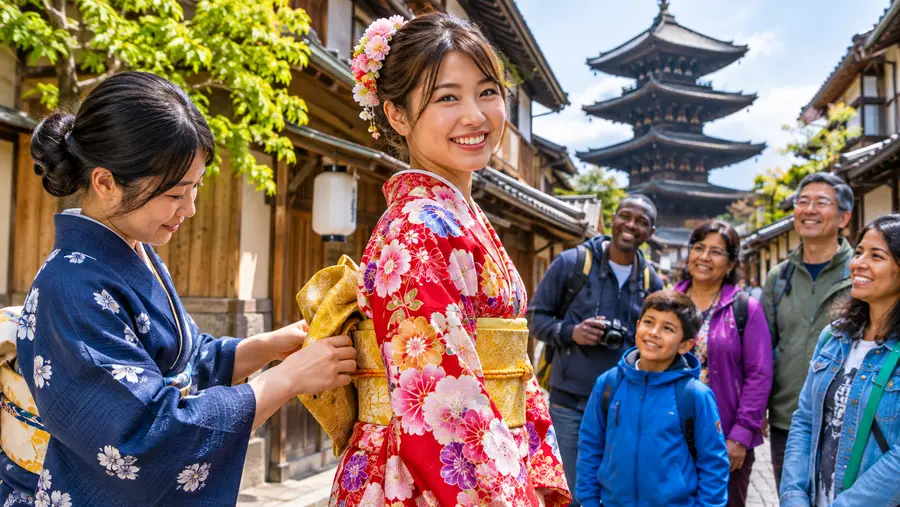
- Sash styling: The dresser ties the obi tightly over your midriff, tucking in an obi-ita plastic board to keep the surface flat and smooth.
- Hair and finishing touches: Hair stylists pin your hair into an updo so your nape shows cleanly, then you choose your mini drawstring bag and sandals.
The entire dressing ritual is an art form. The older dressers, usually aunties who have spent forty years knotting silk, work with swift, no-nonsense hands. They tug firmly. You might feel your lungs have slightly less expansion room than normal. That tightness is intentional, as loose wrapping causes the collar to gap awkwardly and the hem to drop onto dirty pavement after thirty minutes of walking.
If you opted for a beauty package, the styling station comes right after the obi knot. You can read our detailed breakdown on Kyoto Kimono Rental with Photoshoot and Hair Makeup to decide if professional cosmetic styling is worth the extra twenty minutes in the chair.
What Every Kimono Rental Kyoto Review Forgets to Mention
Reading any standard top kimono rental in kyoto list online leaves out the gritty practical realities of moving around town in wooden geta. First, public restrooms become a tactical operation. You have to lift each layer of your kimono individually from the front slit, pin the sleeves back under your arms, and hold the whole bundle securely so nothing grazes the floor. Use the restroom immediately before leaving the rental shop.
Footwear is the second shock. Authentic geta have rigid wooden bases, while modern tourist sandals have dense foam soles with cloth thongs. Even with soft straps, your toes rub against the fabric split of the tabi socks. After three kilometers over uneven stone steps, your calves will feel muscles you forgot existed. Take tiny, inward-turned steps. Gliding forward from the knees rather than swinging your legs from your hips prevents the hem from spreading open and saves your arches from aching.
Weather plays a massive role in your comfort. During July and August, a heavy lined kimono feels like wearing a duvet in a sauna. You must specifically book a light, unlined cotton yukata during summer months. In winter, Kyoto's mountain chill cuts straight through thin silk sleeves, making low-cut heat-tech thermal tops and leggings worn beneath your undergarments an absolute necessity.
- Eat a modest breakfast: An overly full stomach makes the tight obi wrapping feel intensely uncomfortable by noon.
- Bring cash coins: Luggage storage lockers at train stations and temple vending machines rarely accept overseas contactless cards.
- Carry blister patches: Tucking two small bandages into your cloth purse saves your toes if the sandal thong starts rubbing raw.
- Check your camera strap: Heavy DSLR straps rub color off synthetic obi fabrics, so sling your camera over a shoulder rather than cross-body.
Finding a recommended kimono rental kyoto location comes down to where you intend to walk. Pick a shop within ten minutes on foot from your primary sightseeing district. Hauling yourself onto crowded city buses while bundled in tight layers during rush hour ruins the romance of the experience faster than anything else.
Frequently Asked Questions about kimono rental kyoto reservation
How far in advance should I make my kimono rental kyoto reservation?
For peak travel windows like the spring sakura bloom in late March through mid-April, or the autumn foliage across November, reserve your slot four to six weeks early. For regular travel months, booking three to seven days ahead is plenty of time to secure a preferred morning dressing slot.
Can plus-size or tall travelers find kimonos that fit comfortably?
Yes, many larger shops carry extended sizes up to 3XL and lengths suited for visitors over 185 cm tall. However, selection in these categories can be smaller, so mention your height and measurements in the booking notes so staff can set suitable garments aside before your arrival.
What happens to my street clothes and backpack while I am out walking?
The rental studio gives you a numbered luggage bag for your clothes, jackets, and everyday daypack, stored securely in their back room while you explore. Larger rolling suitcases might incur an extra storage fee of around 500 yen if the shop floor space is tight.
What should I wear underneath my rental kimono?
Wear light, scoop-neck undergarments that do not show at the collar line or back of your neck. Avoid collared shirts, high-neck t-shirts, and sports bras that press your shoulders forward. In winter, thin thermal leggings that can be pulled up to the knee work best.
Quick Reference
- Morning dressing slots (9:00-10:00 AM) offer the widest pattern selection.
- Dressing and hair styling take approximately 45 to 60 minutes.
- Standard return cut-off sits around 5:30 PM for same-day rentals.
- Yukata replaces standard kimono during hot summer months (June to September).
- Store shoes, bags, and luggage directly with the shop during your rental.
Book your kimono rental kyoto experience:
Is It Worth It?
Spending five hours exploring the historic lanes of Kyoto in traditional attire alters the entire rhythm of your day. You walk slower, step around puddles with mindfulness, and pause more frequently in shaded temple courtyards. Locals offer warm smiles, and temple backdrops look far more harmonious when your synthetic windbreaker is safely stowed in a locker. While getting wrapped up takes effort and patience, slipping into sandals and listening to the soft rustle of silk as you stroll past bamboo groves is a memorable way to encounter Kyoto's living history.
Read more about kimono rental kyoto.